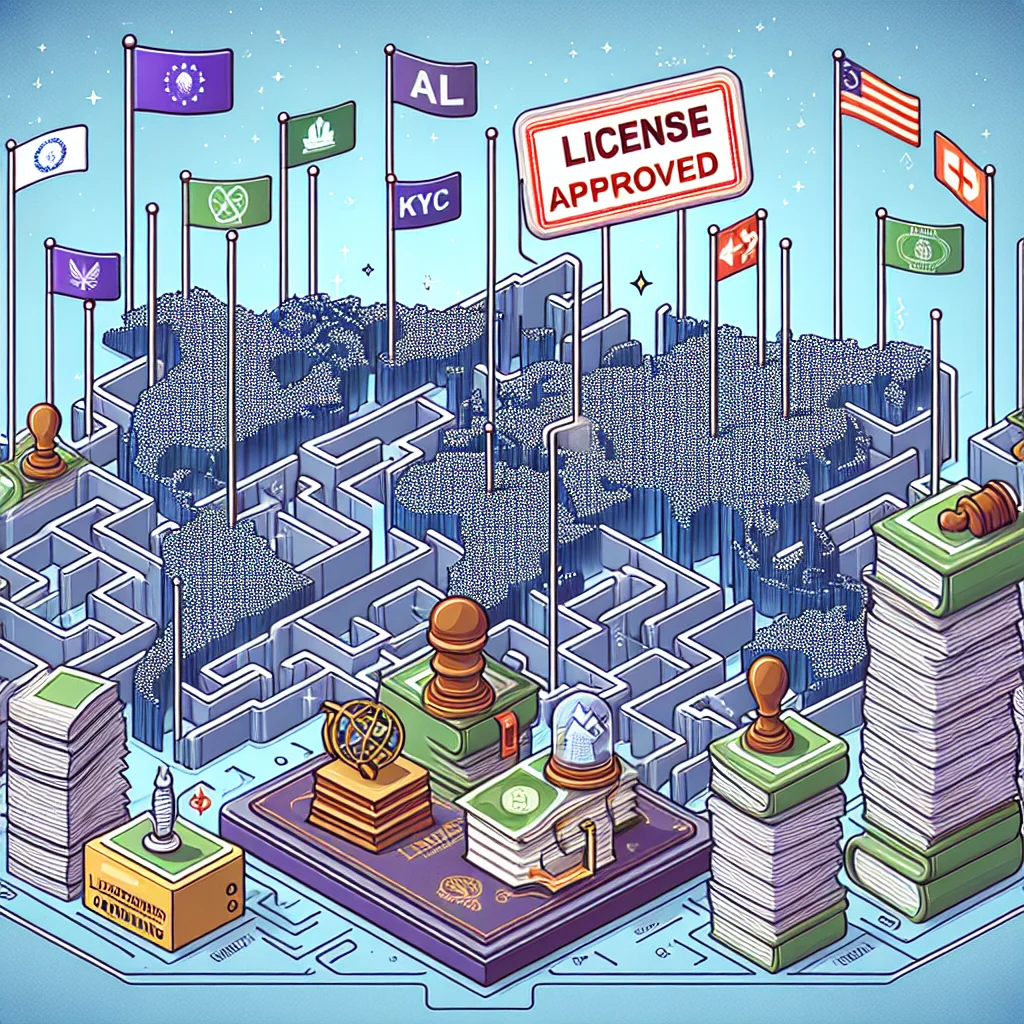
The Price of Admission: The Grueling Path to a Casino License
Before a single chip is bet or a slot machine is powered on, casino operators must navigate a protracted and expensive licensing process that serves as the primary gatekeeper for the industry. This process is designed to establish the suitability, financial stability, and integrity of the applicant. Regulatory bodies, such as the Nevada Gaming Control Board, the UK Gambling Commission, or the Macau Gaming Inspection and Coordination Bureau, conduct exhaustive background investigations. These “suitability checks” delve into the personal and financial histories of all key executives, major shareholders, and even significant vendors. The scrutiny is unparalleled in most other industries; regulators examine sources of wealth, criminal records, business associations, and even personal character. The application itself can cost millions in legal and consulting fees, with no guarantee of success. For new jurisdictions like Japan, the process becomes a global beauty contest, where the world’s largest operators submit thousand-page proposals and make multi-billion-dollar investment promises to win a coveted concession. This high barrier to entry protects the integrity of the market but also ensures that only the most well-capitalized and legally pristine corporations can compete, fundamentally shaping the industry’s oligopolistic structure in many regions.
AML and KYC: The Frontline of Financial Compliance
Perhaps the most critical and costly aspect of casino regulation is Anti-Money Laundering (AML) and Know Your Customer (KYC) compliance. Casinos, by their nature, deal in large volumes of cash and electronic transactions, making them potential conduits for illicit finance. Global bodies like the Financial Action Task Force (FATF) set international standards, which are then enforced by national regulators. Casinos are required to implement robust AML programs that include continuous employee training, suspicious activity monitoring systems, and mandatory reporting of transactions above certain thresholds. The KYC process mandates that casinos verify the identity of their customers, understand the source of their funds, and assess their risk profile. For a high roller depositing millions, this can involve detailed questionnaires and requests for bank statements or business documentation. Failure in this area results in catastrophic consequences, including massive fines, license revocation, and severe reputational damage. The compliance department is therefore not a back-office function but a central operational pillar, with its budget and protocols directly influencing how marketing teams attract players and how cage operations handle cash. The cost of this compliance is enormous but non-negotiable, representing a permanent tax on operations that smaller operators often struggle to bear.
Game Integrity and Technical Standards
Regulation extends deep into the technology of gambling itself. Every slot machine, electronic table game, and random number generator (RNG) must be tested and certified by independent testing laboratories, such as eCOGRA or Gaming Laboratories International (GLI). These labs verify that the games operate fairly, paying out according to their published theoretical RTP, and that the RNGs are truly random and cannot be manipulated. This certification is required before a game can be installed on a casino floor or offered online in a regulated market. Furthermore, regulators set technical standards for security, data protection, and system interoperability. For online casinos, the requirements are even more stringent, covering server location, data encryption, and real-time auditing capabilities. This regulatory framework creates a symbiotic industry of game developers, test labs, and compliance consultants. It also means that the “house edge” is not a secret; it is a transparent, government-audited mathematical certainty. This technical regulation protects the player from fraud and ensures game integrity, which is fundamental to maintaining public trust in the legitimacy of the entire industry, without which it could not exist in a legal form.
Taxation Models: From Revenue Sharing to Profit Levies
Government taxation of gambling is a complex policy tool that balances revenue generation with industry viability. Tax models vary dramatically and define the economic landscape of a jurisdiction. The most common model is a tax on Gross Gaming Revenue (GGR), the net amount retained by the casino after paying out wins. Rates range from single-digit percentages in competitive markets like Nevada to over 50% on certain products in places like Pennsylvania. Some jurisdictions, like the United Kingdom, tax operators on their profits (Gross Gaming Yield), which is less punitive during investment phases or downturns. Others employ a graduated tax rate that increases with revenue, capturing more from the most successful properties. These tax revenues are often earmarked for specific public goods: education, infrastructure, senior citizen programs, or problem gambling treatment. The setting of the tax rate is a constant negotiation. Too high, and it stifles investment, drives players to black markets, or makes operators uncompetitive against neighboring states or online offerings. Too low, and the public perceives that the community is not receiving a fair share of the profits for bearing the social costs. This delicate calculus makes tax policy one of the most potent and politically charged forms of regulation.
Advertising and Responsible Gambling Mandates
Regulators increasingly govern not just how casinos operate, but how they communicate. Advertising regulations are tightening globally. Rules may prohibit ads that target minors, suggest gambling is a solution to financial problems, or portray it as a necessary part of a successful lifestyle. Many jurisdictions now require all advertisements to carry prominent “Play Responsibly” messages and information on where to seek help for problem gambling. The UK has banned the use of sports stars and celebrities popular with children in gambling ads. Furthermore, operators are mandated to implement and fund responsible gambling programs. This includes training staff to identify signs of problem gambling, offering easy-to-use self-exclusion schemes (where a player can ban themselves from all venues), and providing clear information on the risks. Some regulators are pushing for “affordability checks,” requiring operators to verify that a customer’s gambling activity is within their financial means based on credit data or bank statements—a controversial move that pits privacy concerns against consumer protection. These marketing and social responsibility regulations aim to mitigate the harm caused by gambling while allowing the legal industry to function, forcing operators to market their products as a form of adult entertainment with inherent risks, a challenging narrative to sell.
The Global Patchwork and the Rise of Remote Licensing
There is no single global gambling law; operators must contend with a fragmented patchwork of national and sub-national regulations. A company like Entain or Flutter operates under hundreds of separate licenses worldwide. This complexity is a major business cost and a strategic challenge. The rise of online gambling has introduced the model of “remote licensing.” Jurisdictions like Malta, Gibraltar, the Isle of Man, and Curacao offer master licenses that allow operators based within their borders to offer services to customers in other countries, provided those countries do not explicitly prohibit it. This has created hubs of iGaming activity. However, the trend is shifting towards “point of consumption” licensing, where the regulator in the player’s country requires the operator to hold a local license and pay local taxes, regardless of where their servers are based. This regulatory evolution is forcing a consolidation in the industry, as only the largest companies can afford the legal teams and compliance infrastructure to manage this labyrinthine global framework. The future of regulation points towards increased international cooperation, stricter consumer protection standards, and a continued arms race between innovative gambling products and the regulatory bodies struggling to keep pace with technological change.