Market Saturation and the Battle for Local Dominance
The competitive landscape of the casino industry varies dramatically by region, defined largely by the level of market saturation. In mature markets like the United States, competition is intensely localized. The proliferation of regional casinos has created a scenario where operators fight for a finite pool of customers within a drive-time radius. In such markets, competition is less about glitz and more about convenience, promotions, and player rewards. Casinos engage in direct “patron poaching” wars, using aggressive direct mail and digital offers to lure each other’s loyalty club members. They compete on non-gaming amenities—who has the better buffet, the more exciting weekend entertainment, or the more generous slot club. This hyper-local rivalry drives down margins as operators are forced to spend more on marketing and give back a higher percentage of revenue in player comps to retain market share. The economic result is often a consolidation phase, where weaker properties are acquired by larger regional or national players who can achieve economies of scale in marketing, procurement, and operations, ultimately reducing the number of competitors and stabilizing the competitive environment.
Destination Resorts: The Global Contest for the High Roller
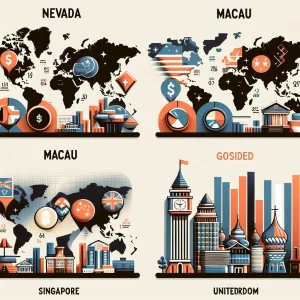
At the opposite end of the spectrum lies competition for the global destination traveler and the ultra-wealthy high roller. This arena is dominated by a handful of branded giants: Las Vegas Sands, MGM Resorts, Wynn Resorts, and in Asia, Melco Resorts & Entertainment. Here, competition is not local but international, fought on the grounds of luxury, exclusivity, and unparalleled service. These companies compete to build the most architecturally stunning integrated resorts, secure partnerships with the most famous chefs and designers, and offer the most extravagant suites and private gaming salons. The battle for the Asian VIP, in particular, has driven billions in investment in Macau and Singapore. Competitive advantage in this segment is built on brand reputation, the quality of the junket partner network (though this is changing), and the ability to provide a seamless, discreet, and opulent experience. The financial stakes are enormous, as a single high roller can generate millions in EBITDA during a visit. This competition creates a high-barrier, winner-take-most dynamic in each destination market, where being second-best often means a significant revenue disadvantage.
Brand Differentiation and Thematic Positioning
In a crowded marketplace, casinos employ sophisticated brand differentiation strategies to carve out unique identities and attract specific customer segments. This goes beyond a logo; it is a comprehensive thematic positioning. Consider the contrasts on the Las Vegas Strip: The Venetian sells Italian romance and grandeur, Bellagio offers artistic sophistication with its fountains and gallery, Caesars Palace trades on ancient Roman empire and power, while the Cosmopolitan targets a younger, hipper demographic with a more contemporary and rebellious vibe. This thematic positioning dictates everything from architecture and interior design to entertainment programming, restaurant partnerships, and marketing voice. It allows a casino to own a specific niche in the customer’s mind. For regional casinos, differentiation might be based on being the “locals’ favorite” with the loosest slots, or the “entertainment hub” with the best concert venue. Successful differentiation reduces direct, head-to-head price competition because customers are choosing based on desired experience rather than just the odds or comps. It builds emotional loyalty, making patrons feel that a particular brand “is for them,” which is a far more defensible competitive position than one based solely on transactional promotions.
The Digital Onslaught: Online Operators vs. Land-Based Incumbents
The most disruptive competitive force in recent years is the rise of online casinos and sportsbooks. This has introduced a new set of competitors—pure-play digital giants like Bet365, DraftKings, and FanDuel—into the traditional casino ecosystem. These digital natives compete on convenience, offering 24/7 access from a smartphone, a wider array of games and betting markets, and aggressive sign-up bonuses. They are not constrained by geography, allowing them to aggregate players from across a state or country. In response, traditional land-based operators have been forced to develop their own digital arms (e.g., BetMGM, Caesars Sportsbook) to defend their customer base. This has created a hybrid competitive landscape known as “omnichannel.” The new competitive battleground is customer ownership across both physical and digital touchpoints. Land-based casinos leverage their trusted brand, physical assets for promotional events, and their existing player databases to cross-sell online products. The digital pure-plays counter with superior technology, user experience, and often, more generous bonus structures. This competition is reshaping marketing budgets, with a massive shift of resources into digital customer acquisition, fundamentally altering the industry’s competitive cost structure.
Consolidation and the Power of Scale
A dominant trend shaping competition is relentless industry consolidation. Large operators pursue mergers and acquisitions to achieve economies of scale, eliminate competitors, and gain access to new markets. The merger of Caesars Entertainment with Eldorado Resorts created the largest casino operator in the U.S. by number of properties. This scale provides immense competitive advantages. A consolidated company can negotiate better rates with slot machine manufacturers and other vendors, run centralized marketing campaigns across its portfolio, share customer data and loyalty programs across regions, and pool management talent. It can also cross-promote; a customer in Las Vegas can be incentivized to visit a sister property in Louisiana. This consolidation creates significant barriers for new entrants and puts immense pressure on smaller, independent operators who cannot match the marketing spend, technology investment, or purchasing power of the giants. The competitive landscape thus bifurcates into a tier of massive, diversified corporations and a tier of niche or localized independents, with the middle ground becoming increasingly difficult to sustain.
Regulation as a Competitive Weapon and Shield
In the casino industry, regulation is not just a constraint; it is a critical component of competitive strategy. Established operators often use the regulatory process as a shield against new competition. They may lobby for high license fees, restrictive zoning laws, or moratoriums on new licenses, arguing for “market stability” or the protection of existing jobs. This is a form of non-market competition. Conversely, in a new jurisdiction, the regulatory framework itself becomes the competitive arena. Operators compete to present the most compelling development plan that aligns with the government’s goals for tourism, tax revenue, and job creation. Once regulations are set, they define the playing field. For example, states that allow online casinos create a different competitive dynamic than those that only allow sports betting. Operators with expertise in a particular regulatory model (e.g., the UK’s point-of-consumption licensing) have a competitive advantage when similar models are adopted elsewhere. Navigating the regulatory environment, influencing its evolution, and ensuring compliance faster and more efficiently than rivals is a hidden but crucial layer of competition that separates winners from losers in this highly scrutinized global industry.